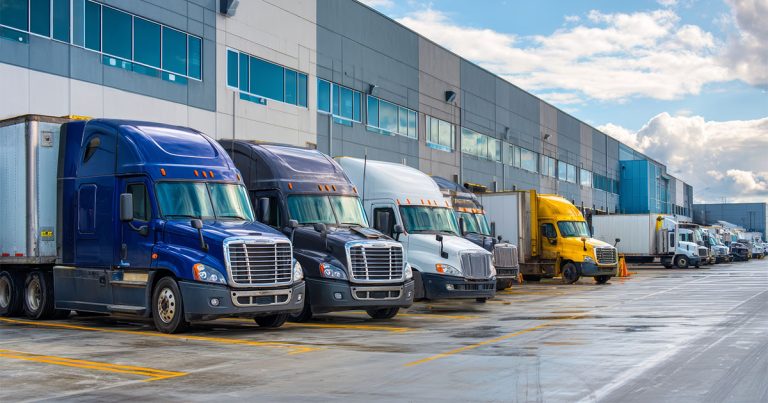
The freight market is in transition.
After years of oversupply, capacity has tightened, rates are climbing again, and carrier exits plus stricter driver enforcement have made trucks harder to come by. Some analysts are calling it the start of a new cycle. Others say the recovery is uneven and not really demand driven.
Walk through any yard right now, though, and you’d struggle to find that recovery.
Drivers are still sitting in detention for hours. Roles are still going unfilled, and the ones you do fill turn over faster than you can train them. Yards are still backed up at peak windows, with appointments slipping into multi-hour waits because the warehouse is understaffed or the chassis isn’t where it’s supposed to be.
So is the market actually improving? Or is “improvement” just code for higher rates and harder execution?
Detention, labor strain, and congestion trends would all tell you the latter.
Detention: The Unpaid Hour Costing the Industry Billions
Detention isn’t new. What’s new is the price tag.
ATRI’s most recent analysis put 2023 detention costs at $15.1 billion across the industry. That breaks down to $11.5 billion in lost productivity and $3.6 billion in direct expense. Drivers were detained on 39.3% of all stops, and more than half of truckload drivers ran out of hours of service at a customer’s facility at least once that year.
In a soft market, you can eat that cost. In 2026, with capacity tight and tender rejections holding above 10%, you can’t. Every detained truck is one that doesn’t book a second load, one more driver creeping toward a rejected lane, and one more reason for a carrier to drop you down its preference list.
Labor: Fewer Drivers, Fewer Dockworkers, Same Volume
If detention is the symptom, labor is part of what’s causing it.
Start at the dock. Warehouse turnover is running around 45%, and 76% of logistics leaders report ongoing workforce shortages. Understaffed receivers mean longer unload windows, missed appointments, and trucks waiting on a forklift that nobody’s there to drive.
The driver side is tightening at the same time. BLS payroll revisions in February 2026 showed 122,000 trucking positions had vanished from employment rolls since October 2022.
What’s more, Operation SafeDRIVE alone pulled 704 drivers out of service in a single three-day window, with roughly 500 of those tied to English proficiency enforcement. Carriers expect tens of thousands more CDLs to come off the road as the non-domiciled CDL rule plays out.
Congestion: The Network Itself Is Slower
Even if you have the truck and the labor, the network the freight moves through is moving more slowly.
ATRI’s 2026 Top 100 Truck Bottlenecks report put 2025’s congestion delays at the equivalent of 436,000 drivers sitting idle for an entire year. Average rush-hour truck speeds dropped to 33.2 mph, 2.8% slower than the year before. At the worst 10 choke points, that falls to 29.6 mph.
Ports tell the same story differently. Schedule reliability sits around 27%, with weekly port congestion running 15-55% higher this year on key lanes. Even ports averaging normal wait times are seeing long-tail delays, with a small number of vessels sitting for days while the rest move through.
The load that started in detention, then went to an understaffed receiver, now hits a slower network on the way to and from both.
How We at Qued Help Ops Teams Win in This Freight Market
The three pressures hammering ops teams right now all funnel into the same place: the dock.
Detention is where the unpaid hours pile up. Labor strain is what stretches a 30-minute unload into a half-day event. Congestion is what eats the appointment window before your driver even pulls in. The dock itself runs on appointments, and for most teams, those appointments are still being hand-cranked through 12 tabs, two phone lines, and a sticky note that says “call back at 3.”
That’s the gap we built Qued to close.
- Appointment Booking Across Every Channel You Already Use: We handle 40+ receiver portals, email threads, phone calls, and EDI feeds without your planners switching tabs or rekeying load numbers. Axle Logistics compressed a 60-appointment batch from five hours down to 30 minutes after going live with us.
- AI Voice Calls That Don’t Sound Like a Robot: Our platform dials facilities, runs the appointment call, and writes the result back to your TMS, as clean structured data. Diel-Jerue rolled out our AI voice scheduling in under 90 days and hit 92% automation within three months.
- Rescheduling That Happens Before You Notice: When an ETA slips because of yard congestion or a closed receiver, we flag the at-risk appointment and rebook it before your driver burns two hours in a window that’s already gone.
- One Source of Truth Across Every Booking: Every appointment, regardless of channel, lands in your TMS as a single structured record that your whole team works off the same way. The handoffs that used to live in inboxes and sticky notes now live where the load lives.
- Roughly 22 Hours Per Week Back Per Planner: Our customers consistently report 22 hours per person per week saved on scheduling tasks alone. That’s a part-time headcount your team can redirect to exception handling, customer calls, or anything else that pays better than chasing portals.
Stop Absorbing the Cost. Start Cutting the Friction.
Nobody on your team is going to fix the freight market this quarter. But what you can change is how much of that volatility you let through your front door.
Right now, most ops teams are absorbing it one appointment at a time. The cost shows up later as detention invoices, burnt-out planners, and the customer who quietly starts shopping their freight somewhere else. Yet, fixing it doesn’t take a reorg or some 12-month transformation deck. It takes getting appointment scheduling out of your planners’ inboxes and into something that handles it for them.
That’s our bread and butter here at Qued. Book a demo, and we’ll show you what 22 hours a week back per planner looks like inside your own TMS.